
Lower Back Pain: How Massage Can Help Where Stretching Falls Short


Lower back pain is one of the most common physical complaints in the world, and also one of the most frustrating to deal with. You try stretching. You buy a better chair. You sleep with a pillow between your knees. Sometimes things improve a little, sometimes they do not. If you have been managing lower back pain on your own and not getting the results you hoped for, massage therapy may offer the kind of relief that self-directed approaches often cannot.
Why Stretching Only Gets You So Far
Stretching is genuinely useful for maintaining flexibility and improving range of motion. But when lower back pain is driven by muscle tension, trigger points, or restricted fascia, stretching alone does not address those underlying issues with enough specificity.
Tight muscles respond to a stretch by temporarily lengthening, but they often return to their shortened state quickly — especially if they are protecting an underlying structural issue or holding chronic tension that has been building for months or years. You can stretch the same muscles every day and still feel tight, because the root of the tension has not been addressed.
What Massage Does Differently
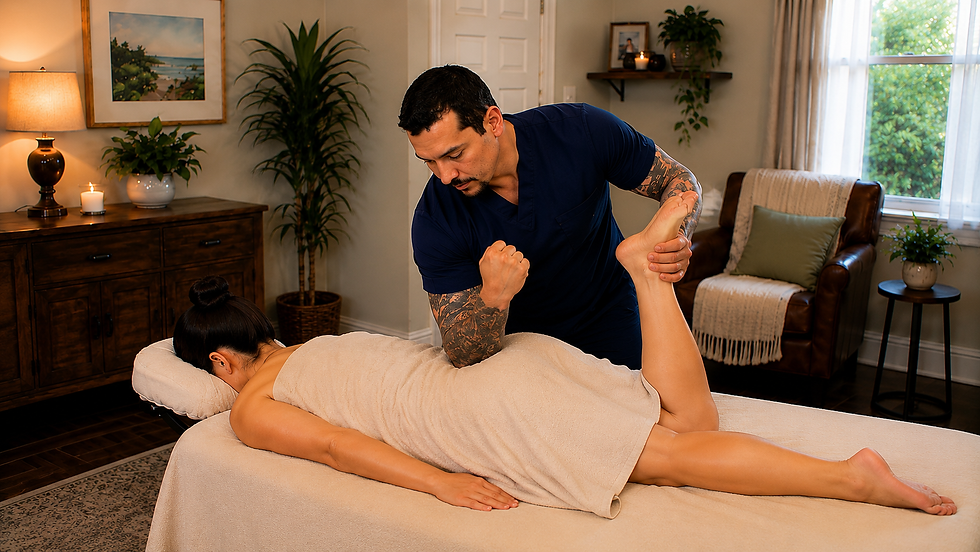
Skilled massage therapy works directly on the tissue. The therapist can locate specific areas of restriction, trigger points, and fascial tightness that a stretch cannot reach with the same precision. By applying targeted pressure and sustained technique, the therapist helps the muscle release at the level of the tissue itself, not just the length of the muscle.
Massage also improves circulation to the area. Lower back muscles are notoriously poorly circulated when held in tension, which means they are not receiving the oxygen and nutrients they need to recover. Better circulation supports faster healing and more lasting relief.
Understanding What Is Actually Causing Your Pain
Lower back pain has many potential sources. Tight hip flexors from prolonged sitting can pull the pelvis into an anterior tilt, creating compression in the lumbar spine. Tight hamstrings can do the same. The piriformis muscle, deep in the glute, can irritate the sciatic nerve and create pain that radiates down the leg. A skilled therapist will assess these contributing factors, not just work on where it hurts.
This whole-system approach is often what makes massage more effective than self-directed stretching. The source of lower back pain is frequently not where the pain is felt.
When to Seek Additional Support
Massage is highly effective for muscle-related lower back pain, but there are situations where additional medical evaluation is warranted. If your pain is accompanied by numbness, tingling, or weakness in the legs, or if it came on suddenly after an injury, a conversation with your doctor or physical therapist is the right first step.
For the vast majority of people dealing with chronic lower back tension and ache, however, consistent therapeutic massage — combined with attention to posture and movement habits — can produce meaningful and lasting improvement. It is one of the most well-supported therapeutic tools available for this particular complaint.


Comments