
Sciatica and Massage: What You Need to Know

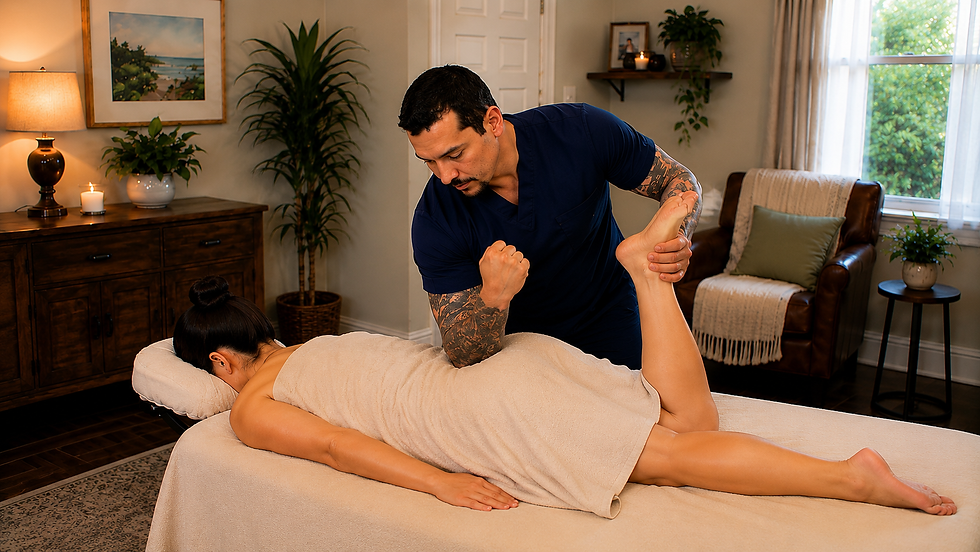
Sciatic pain has a distinct quality that makes it hard to ignore and hard to explain to someone who has not experienced it. It can feel like a sharp shooting pain, a deep burning ache, or an electric jolt that travels from the lower back or buttock down the leg. It can make sitting, standing, and walking all feel like compromises. And while the medical world has a lot to say about sciatica, massage therapy often does not get the recognition it deserves as a meaningful part of managing it.
What Sciatica Actually Is
The sciatic nerve is the longest nerve in the body. It originates in the lower lumbar spine, passes through the buttock, and travels down the back of the leg. When this nerve becomes compressed or irritated — whether by a herniated disc, spinal stenosis, or tight surrounding muscles — the result is the characteristic radiating pain known as sciatica.
Not all sciatic-like pain has a spinal cause. The piriformis muscle, which sits deep in the gluteal region, runs directly next to or sometimes through the sciatic nerve. When this muscle becomes tight or goes into spasm, it can compress the nerve and produce symptoms that are essentially identical to discogenic sciatica.
Where sciatica massage Is Most Effective
Massage therapy is particularly valuable when sciatica is being driven by piriformis tightness, sometimes called piriformis syndrome. By releasing the piriformis and surrounding gluteal muscles through targeted deep tissue work and trigger point therapy, the pressure on the sciatic nerve can be significantly reduced, often providing relief that stretching alone cannot match.
Massage also helps with the secondary muscle tension that sciatica tends to create. When the body is in pain, surrounding muscles brace and guard reflexively. Over time, this creates a web of secondary tension that compounds the original problem. Addressing this broader pattern of tightness helps restore more normal movement and reduces overall discomfort.
What Massage Cannot Do
It is worth being honest about the limits here. If your sciatica is caused by significant disc herniation or serious spinal stenosis, massage alone is not going to resolve the structural issue. It can help manage symptoms and improve quality of life, but it should be part of a broader treatment plan that includes appropriate medical evaluation.
A responsible therapist will also recognize when symptoms suggest something that warrants medical attention — particularly if there is significant weakness, numbness, or any bladder or bowel changes. These are signals to seek medical evaluation promptly.
Practical Considerations
If you are dealing with sciatica and considering massage, communicate your symptoms clearly and specifically before the session. Let the therapist know where the pain originates, where it travels, what aggravates it, and what has helped. A targeted session that addresses the piriformis, gluteals, and lumbar muscles is often far more effective than a general back massage, and a skilled therapist will know how to approach it.


Comments