
Swedish Massage 101: What It Is and When to Choose It


If you have ever searched for a massage and felt overwhelmed by all the options, you are not alone. Swedish massage is usually the first style people encounter, and yet most people have only a vague idea of what it actually involves. The name makes it sound exotic, but Swedish massage is really the foundation that most Western massage therapy is built on. Understanding what it is — and when it makes sense for you — can help you get a lot more out of every session.
What Makes It Swedish?
Despite the name, Swedish massage was not invented in Sweden. It was developed in the early 1800s and became one of the most widely practiced forms of therapeutic touch in the Western world. The technique centers around long, flowing strokes called effleurage, combined with kneading, circular pressure, and rhythmic tapping.
The goal is to warm up the muscles, improve circulation, and ease the body into a state of deep relaxation. Unlike deep tissue work, which targets specific knots or chronic tension in the deeper muscle layers, Swedish massage works primarily on the surface and mid-level layers of muscle tissue.
What to Expect During a Session
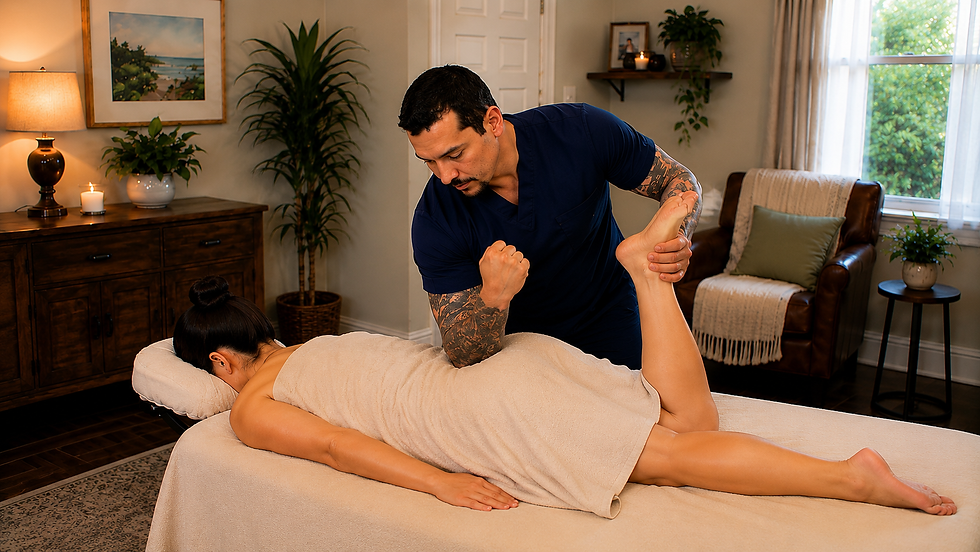
A Swedish massage session is typically full-body, though your therapist will always work within your comfort level. You will lie on a table, draped with a sheet, and your therapist will use massage oil or lotion to allow for smooth, uninterrupted strokes.
The pressure is generally moderate — firm enough to be felt, but not intense. Most clients find themselves drifting into a deeply relaxed state fairly quickly. Sessions usually run between 60 and 90 minutes, though even a shorter session can be meaningful.
When Swedish Massage Is the Right Choice
Swedish massage is ideal for a few specific situations. If you are new to massage therapy, this is almost always the best starting point. It lets your body get used to therapeutic touch without overwhelming your nervous system with deep pressure.
It is also an excellent choice when stress is your primary concern. If you have been carrying the weight of a difficult week, a heavy workload, or the general noise of a busy life, Swedish massage does a remarkable job of calming the nervous system and helping you exhale — really exhale — for the first time in days.
For anyone dealing with mild muscle tension that has not escalated into chronic pain, Swedish massage offers real relief. It improves blood flow, reduces muscle soreness, and leaves you feeling physically lighter. It can also be a wonderful maintenance tool between deeper sessions, helping your body stay balanced.
Swedish vs. Deep Tissue: Knowing the Difference
A question that comes up often is whether Swedish or deep tissue massage is better. The honest answer is that neither is universally superior — they serve different purposes.
Swedish massage is about broad relaxation, improved circulation, and gentle release. Deep tissue massage goes further into the muscle tissue to address chronic tension, adhesions, and more specific pain issues. Many clients rotate between the two depending on what their body needs at any given time.
If you are unsure which is right for you, a good therapist will help you figure it out before the session even begins.
Making It Work for You
One of the best things about Swedish massage is how adaptable it is. Pressure can be adjusted, focus areas can be identified, and the experience can be shaped around exactly what you need. Communication with your therapist is everything here. Do not be afraid to say the pressure is too light, or that your shoulders need more attention.
Whether you are booking your very first massage or simply returning to a style you know works for you, Swedish massage is one of the most reliable tools in the wellness toolkit. Simple, effective, and genuinely restorative — it has stood the test of time for a reason.


Comments